Articles and Research
Trauma Sensitive Yoga (Trauma Center Trauma Sensitive Yoga)
Trauma Center Trauma-Sensitive Yoga (TCTSY) was developed in the early 2000s at the Trauma Center in Brookline, Massachusetts. TCTSY is grounded in trauma theory, attachment theory, and neuroscience, with a strong emphasis on the impact of trauma on the nervous system and body. TCTSY is recognized as an evidence-based adjunct treatment for complex trauma and is listed on the National Registry of Evidence-Based Programs and Practices (NREPP, now maintained through SAMHSA archives). TCTSY emphasizes participants noticing and exploring their own experience in the moment. This approach supports healing by helping individuals reconnect with their bodies in ways that are paced, voluntary, and grounded in personal autonomy.
Yoga Therapy Articles and Research
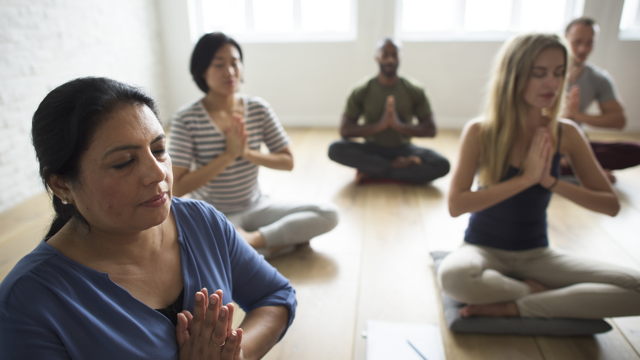
Yoga Therapy has its roots in the ancient traditions of yoga, which originated in India over 3,000 years ago, early yogic texts describe yoga as a holistic system for cultivating physical health, mental clarity, and spiritual awareness. Yoga Therapy has emerged as a complementary approach that integrates traditional yogic practices with modern understandings of anatomy, physiology, and mental health.
Common benefits of Yoga Therapy include:
Improved nervous system regulation and stress resilience
Reduced symptoms of anxiety, depression, and chronic stress
Increased body awareness and mind-body connection
Support for trauma recovery and emotional processing
Improved mobility, strength, and physical function
Enhanced sleep quality and relaxation
Greater sense of balance, grounding, and overall well-being

Sound, Singing Bowl, and Meditation Research
The use of Tibetan Singing Bowls for healing dates back to approximately 560–480 B.C. This tradition is believed to have originated in India and was later brought to Tibet. The bowls have now made their way to the West where they have became deeply integrated into spiritual, meditative, and healing practices.
Today, these instruments are commonly used in Vibrational Sound Therapy, a modality that utilizes sound frequencies and vibration to support relaxation, nervous system regulation, and overall well-being. During a session, therapeutic-grade singing bowls are placed on or around the body and gently played, allowing the vibrations to be felt physically as well as heard.
The sounds and resonant frequencies produced by singing bowls are often used to support meditation, stress reduction, and deep relaxation. Many people report a calming effect on the mind and body, as the vibrational waves may help ease tension, encourage stillness, and support a greater sense of balance and grounding within the body.

The Healing Power of Sound as Meditation
Sound Affects: Sound Therapy, Altered States of Consciousness and Improved Health and Wellbeing
Effects of Singing Bowl Sound Meditation on Mood, Tension, and Well-being: An Observational Study
Sound Healing – How it Works and Its Health Benefits
Cardiovascular and nervous system changes during meditationSound Therapy Induced Relaxation: Down Regulating Stress Processes and Pathologies